
For most engineering and science professors in India, the Continuous Internal Evaluation (CIE / Internal Assessment) cycle is an exhausting administrative marathon.
Every semester, faculty must set 2 to 3 internal assessment papers for each subject taught. Under autonomous college schemes, affiliated state technical universities, and NBA SAR Criteria 2, you cannot simply pick 5 textbook questions and write them on a sheet of paper.
The Internal Assessment Nightmare
Faculty are required to satisfy four simultaneous regulatory criteria:
- Map Every Question to an Approved Course Outcome (CO1-CO5).
- Assign Revised Bloom's Taxonomy Cognitive Levels (L1 to L6) to Every Sub-Question.
- Ensure Strict Cognitive Balance: Avoiding the common trap of setting only memory-recall definitions (LOTS) while maintaining fair difficulty.
- Draft an Exhaustive Scheme of Evaluation (SoE): Specifying step-by-step partial marks (e.g., 2 marks for circuit diagram, 3 marks for formula, 3 marks for derivation steps, 2 marks for final numerical answer with units).
| Question Paper Setting Stage | Average Time Required |
|---|---|
| 1. Finding and Writing Balanced Numericals | 60-90 Mins |
| 2. Mapping COs & Verifying Bloom's Level Distribution | 30-45 Mins |
| 3. Solving & Drafting the Complete Scheme of Evaluation | 60-90 Mins |
| 4. Departmental Moderation Committee Revisions | 30-45 Mins |
| Total Time Spent Per Question Paper | 3-4.5 Hours |
Multiply this by 2 or 3 theory courses across 3 internal tests per semester, and an individual professor spends 25 to 40 hours per semester on mechanical question paper drafting alone.
The AICTE Cognitive Distribution Framework
The AICTE Examination Reforms Policy emphasizes that engineering and technical assessments must shift away from rote memorization toward authentic, higher-order problem solving. Specifically, the policy recommends capping lower-order knowledge questions (LOTS) at no more than 40%, while allowing institutional Boards of Studies to tailor exact cognitive weightings based on course maturity.
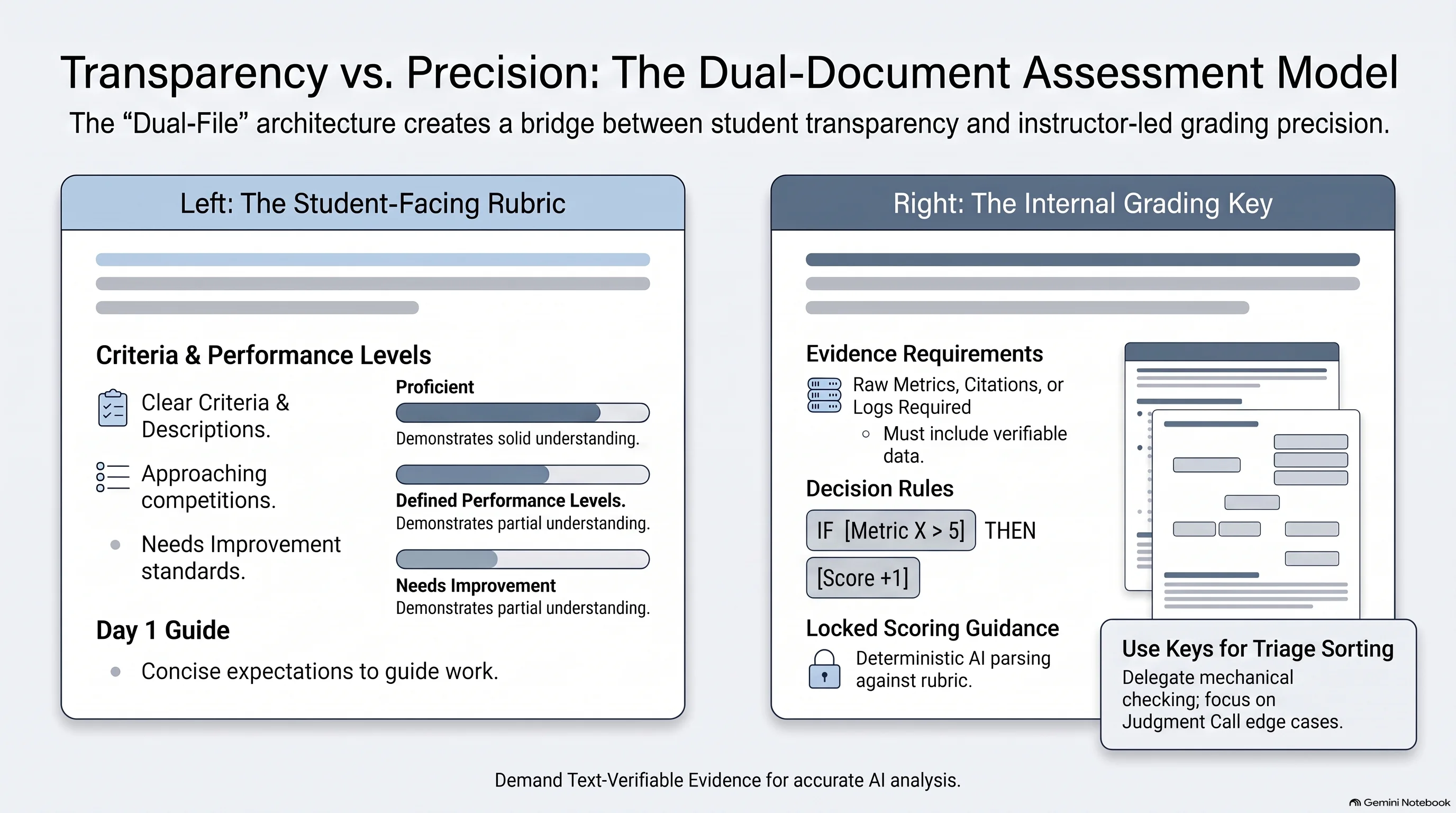
Within this ≤ 40% LOTS boundary, a widely adopted Outcome-Based Education (OBE) benchmark for a standard 50-mark Continuous Internal Evaluation (CIE) test is the 30% LOTS / 50% MOTS / 20% HOTS distribution:
| Cognitive Tier | Revised Bloom's Levels | Target Distribution | 50-Mark CIE Allocation | Typical Question Formats |
|---|---|---|---|---|
| Foundational (LOTS) | L1 (Remember) & L2 (Understand) | 30% (Policy cap: ≤ 40%) | 15 Marks | State laws, define terms, explain mechanisms, draw functional block diagrams, state assumptions. |
| Core Disciplinary (MOTS) | L3 (Apply) & L4 (Analyze) | 50% | 25 Marks | Numerical calculations, algorithm tracing, circuit design, bug isolation, comparative performance analysis. |
| Advanced (HOTS) | L5 (Evaluate) & L6 (Create) | 20% | 10 Marks | Multi-variable trade-off analysis, system design for real-world constraints, architectural critiques. |
The Persistent Workspace Advantage
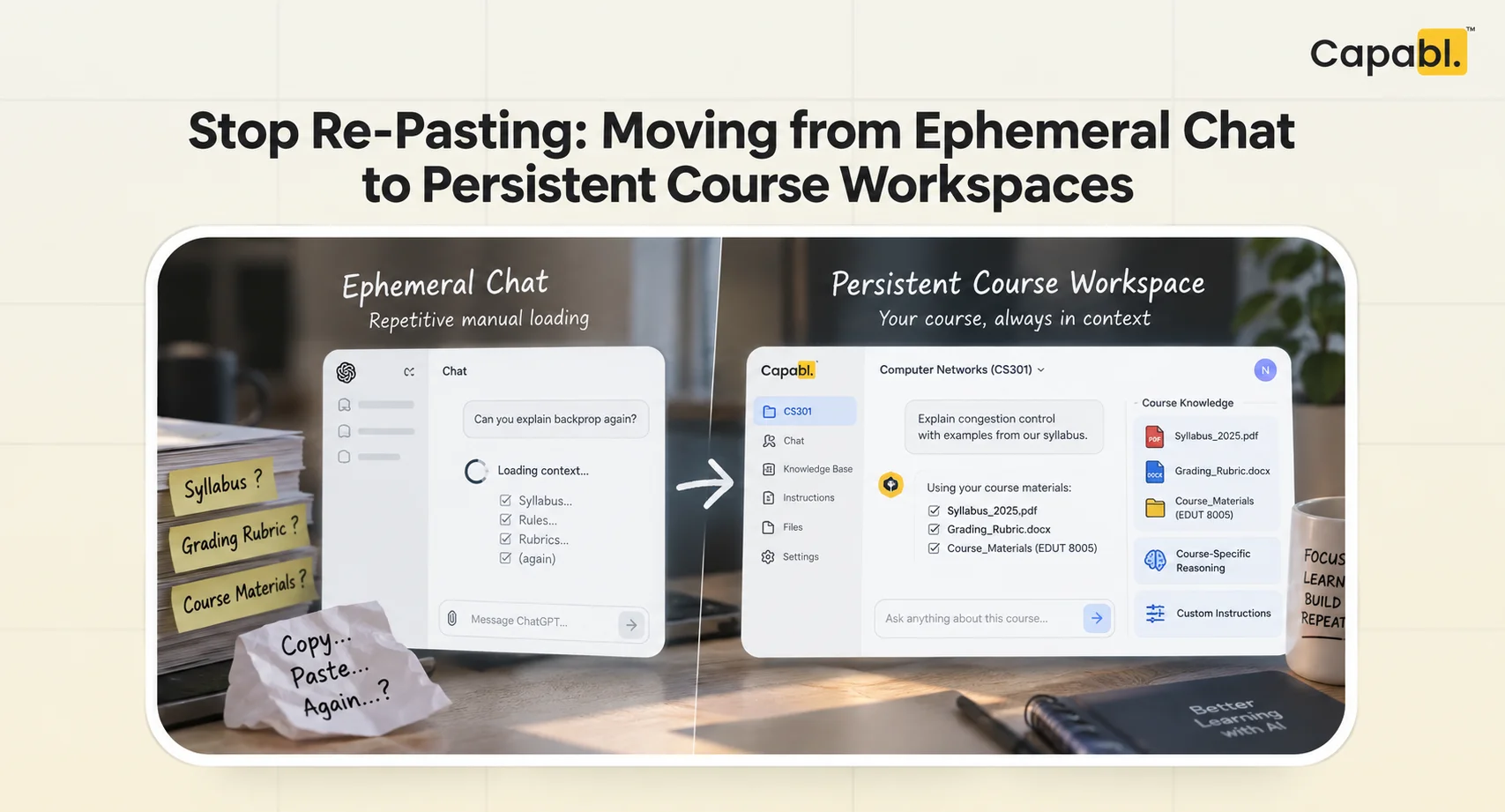
When you prompt a generic chatbot to \"Create a test on Control Systems,\" it fails because it does not know your university's question paper structure or mark schemes.
However, inside a Claude Project Digital Course File, the AI already has:
- Your approved Course Outcomes (CO1 to CO5).
- Your university's question paper template (e.g., Part A short answers, Part B analytical problems with internal choice, Part C design questions).
- Your prescribed textbook references (e.g., Ogata, Nagrath & Gopal).
When prompted, it outputs an examination paper formatted strictly according to institutional standards, complete with a Departmental Moderation Matrix and a Scheme of Evaluation.
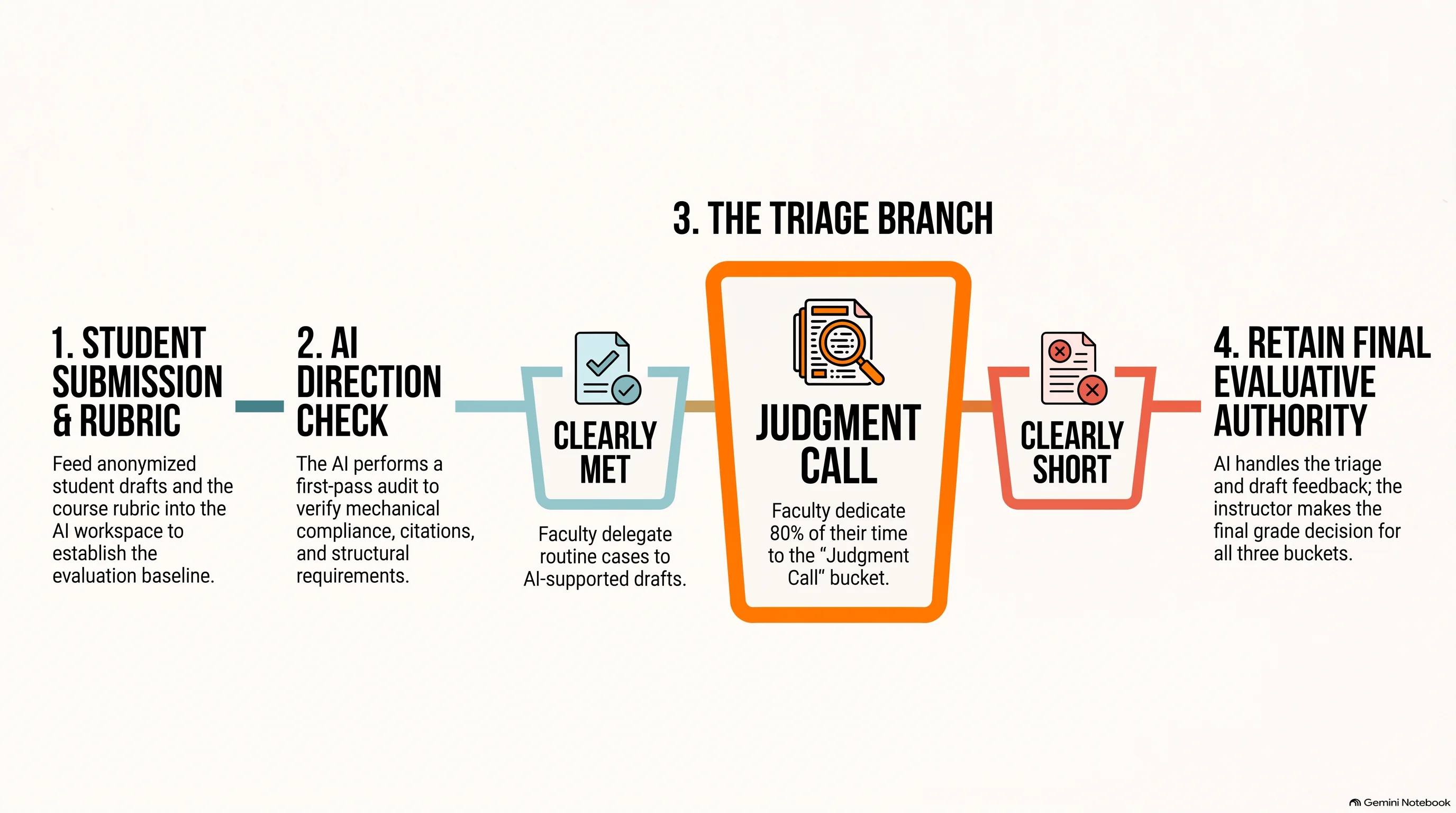
Copy-and-Run Blueprint: The Master CIE Question Paper & Scheme Generator
Execute this prompt directly in your Claude course workspace:
System Persona: Chief Controller of Examinations and Senior Member of the Board of Studies (BOS) for an Autonomous Engineering College in India.

Task: Generate a complete, balanced Continuous Internal Evaluation (CIE) Question Paper and an exhaustive step-by-step Scheme of Evaluation for the course below.

Course Context:
- Course: [e.g., CS403: Design & Analysis of Algorithms]
- Assessment: CIE Test 1 (Duration: 90 Minutes | Maximum Marks: 50)
- Prescribed Syllabus: Unit 1 (Asymptotic Notations & Divide-and-Conquer) and Unit 2 (Greedy Algorithms)
- Targeted COs: CO1 (Analyze worst-case time complexities - L4) and CO2 (Design Greedy solutions - L3)

Question Paper Structure Requirements (Strict AICTE 30 / 50 / 20 Distribution):
1. Part A (15 Marks / 30%): 5 compulsory short-answer questions of 3 marks each (L1/L2 - Foundational).
2. Part B (25 Marks / 50%): 2 analytical/derivation questions with internal choice ('OR' pattern, L3/L4 - Core Engineering).
3. Part C (10 Marks / 20%): 1 comprehensive application/design problem (L5/L6 - HOTS).
4. Explicit Tagging: For every single sub-question, explicitly state: [Q.No], [Question Text], [Target CO], [Revised Bloom Level: L1-L6], and [Allocated Marks].

Deliverables:
1. Complete, print-ready Question Paper.
2. Departmental Moderation Checklist verifying exact Bloom percentage distribution (L1/L2: 30%, L3/L4: 50%, L5/L6: 20%).
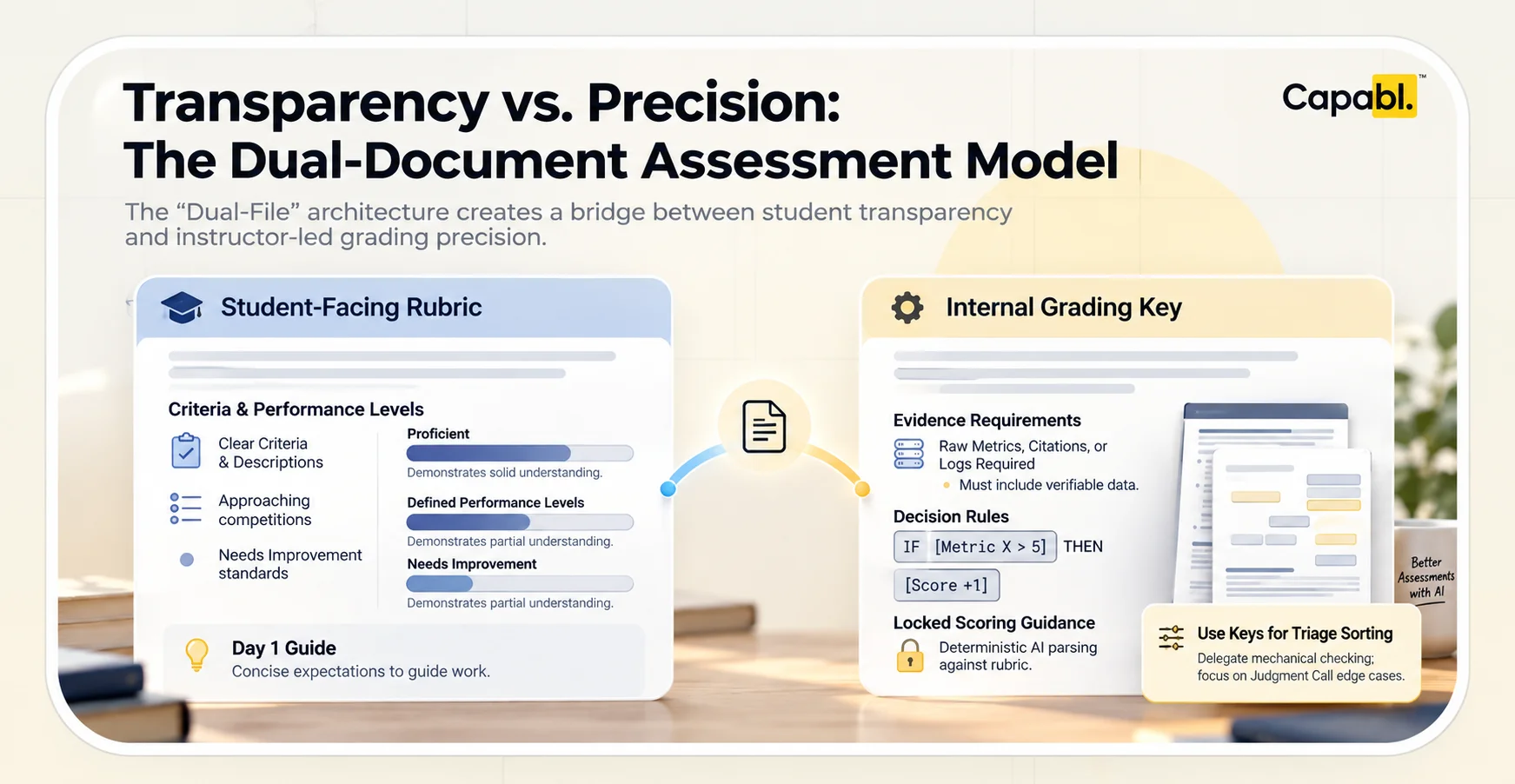
3. Exhaustive Scheme of Evaluation (SoE): Step-by-step partial marking rubrics (e.g., 2 marks for algorithm, 3 marks for recurrence relation, 3 marks for substitution steps, 2 marks for final asymptotic complexity).
The Verification Protocol: What the Professor Must Always Check
While Claude drafts the structure and solutions with high speed, the professor remains the sole evaluative authority. Before submitting the draft paper to the Departmental Moderation Committee:
- Verify Mathematical Derivations: Check numerical signs, constant values, and intermediate substitution steps.
- Check Question Ambiguity: Ensure diagrams and circuit parameters have realistic component values (e.g., standard resistor and capacitor ratings).
- Verify Question Paper Secrecy: Ensure unreleased question papers are stored on secure local drives and never shared across public channels.
Inspire Others – Share Now
Agentic AI Saksham
India’s Only 1st Ever Offline Hands-on program that adds 4 Global Certificates while making you a real engineer who has built their own AI Agents
EV
Saksham
India’s Only 1st Ever Offline Hands-on program that adds 4 Global Certificates while making you a real engineer who has built their own vehicle
Agentic AI LeadCamp
From AI User to AI Agent Builder — Capabl empowers non-coding professionals to ride the AI wave in just 4 days.
Agentic AI MasterCamp
A complete deployment ready program for Developers, Freelancers & Product Managers to be Agentic AI professionals