

It's fascinating how quickly the development landscape is changing. I recently spent some time playing around with two of the hottest tools that leverage AI and visual building: Bubble.io and Vercel's v0. I wanted to see how they stack up for a real-world task, so I gave them both the same relatively complex prompt:
"Develop a Chrome extension that can check the SEO of the current website."
The results were genuinely surprising, offering a clear view of where each platform shines. Honestly, it became less about which one is "better" and more about which one fits the specific job you're trying to do.
The Initial Prompt & The Chrome Extension
Right out of the gate, the differences in their core DNA became obvious.
Bubble.io, being a full-stack, no-code platform, just isn't designed to spit out a Chrome extension. Instead of an extension, it interpreted the prompt as "Build a web application that checks SEO," and that’s what it did. It delivered a functional, hosted website structure where you could presumably input a URL. Not what I asked for, but understandable given its focus.

v0, on the other hand, delivered exactly what I asked for: an extension. It provided the necessary React and Tailwind CSS code, complete with the basic manifest structure needed for a Chrome extension. This really highlighted v0's power as a code generation tool tailored for the developer ecosystem.
Building a Website
To make it a fair comparison, I then asked v0 to build a web application based on the same SEO-checking prompt. This is where the results got genuinely shocking and flipped some of my initial assumptions.
While the initial, unrefined prompt on Bubble.io managed to churn out a simple, sleek-looking design that felt immediately usable, v0 truly flexed its muscles under the hood.
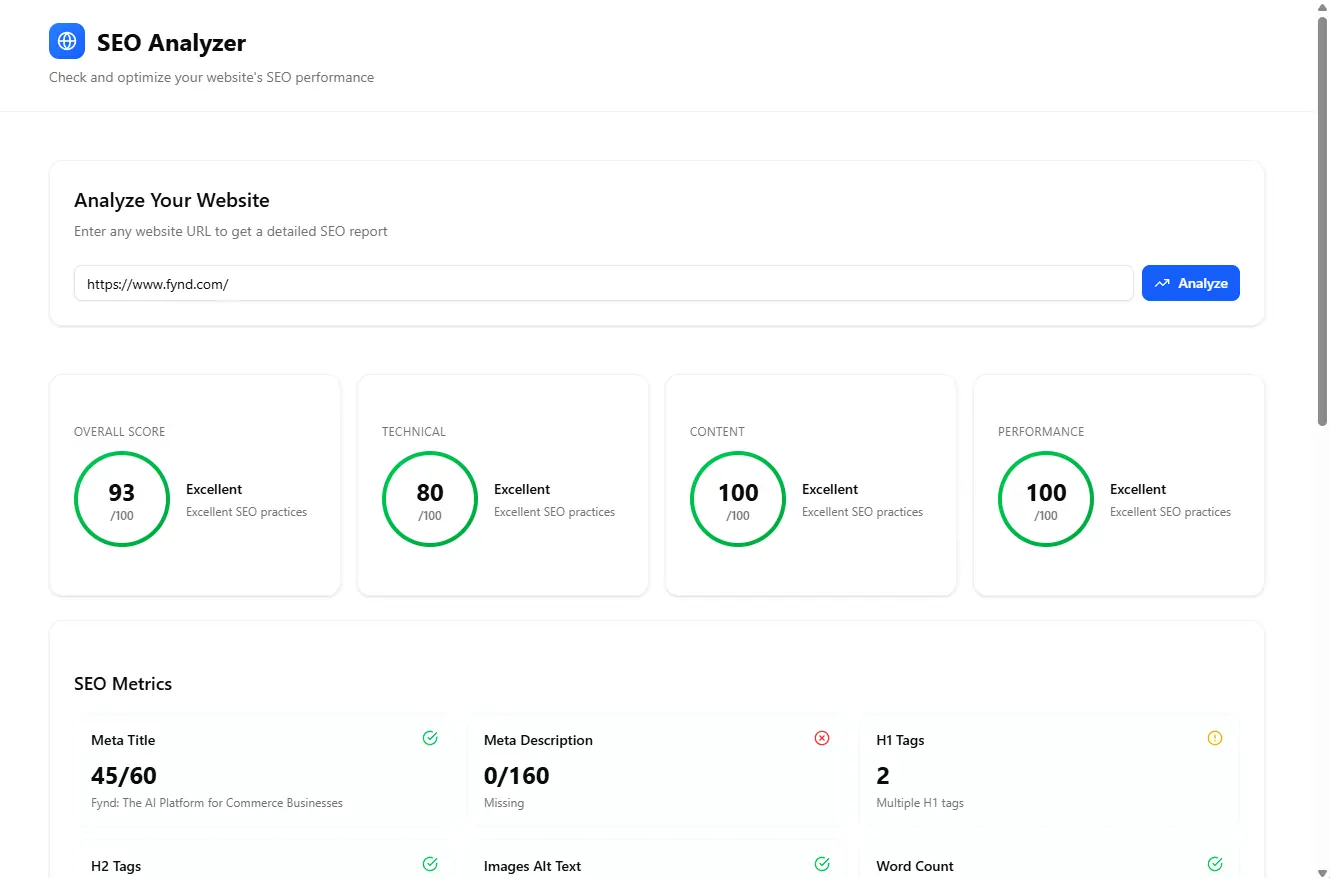
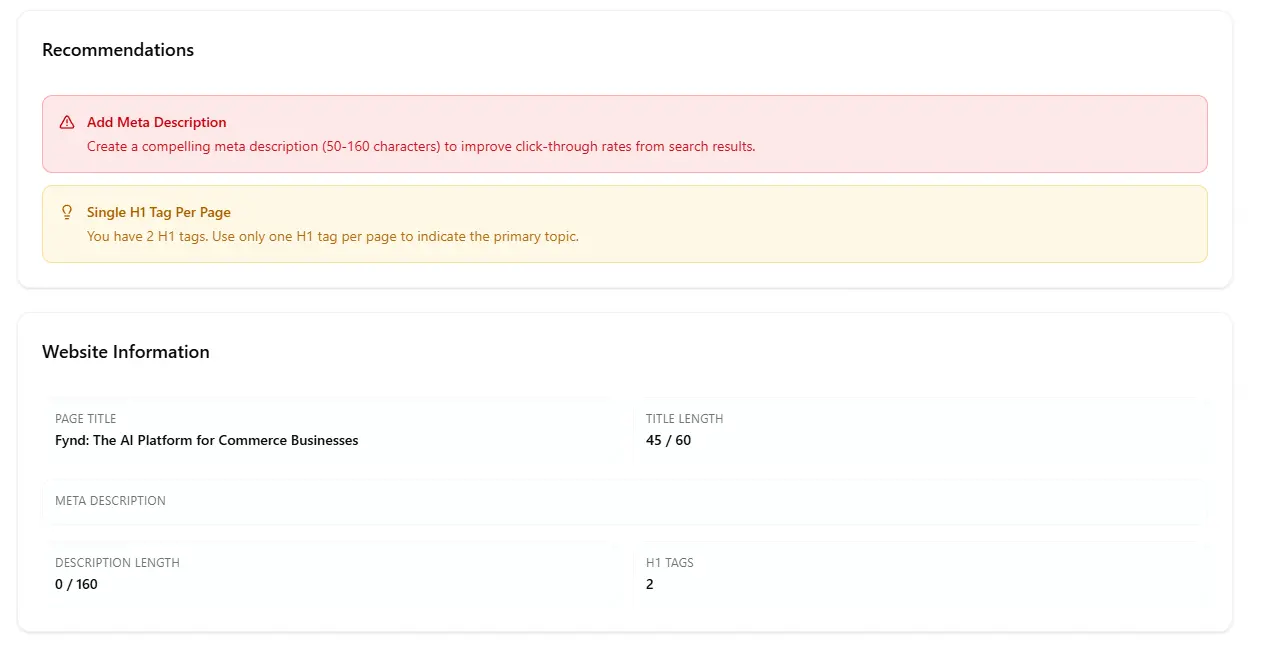
v0 didn't just deliver the front-end code; it also generated a complete API route with static logic. This wasn't just a dummy site; the code included the actual foundational logic to perform basic SEO checks: counting H1 and H2 tags, checking for images with alt text, and identifying internal versus external links. It basically handed me the brain of the application, ready to be plugged into a Next.js environment.
Bubble.io is about building the flow and the UI visually, and you'd use its internal workflows to build that logic. v0, however, delivered the actual, implementable JavaScript logic. That's a huge win for speed and development efficiency.
The Front-End Polish and Structure
This is the one area where Bubble.io maintained a clear lead, at least in the first iteration.
With just the initial prompt, the web application created by Bubble had a more professional and cohesive look. The UI felt cleaner, and the underlying conceptual directory structure (how a no-code app organizes itself) felt very logical.
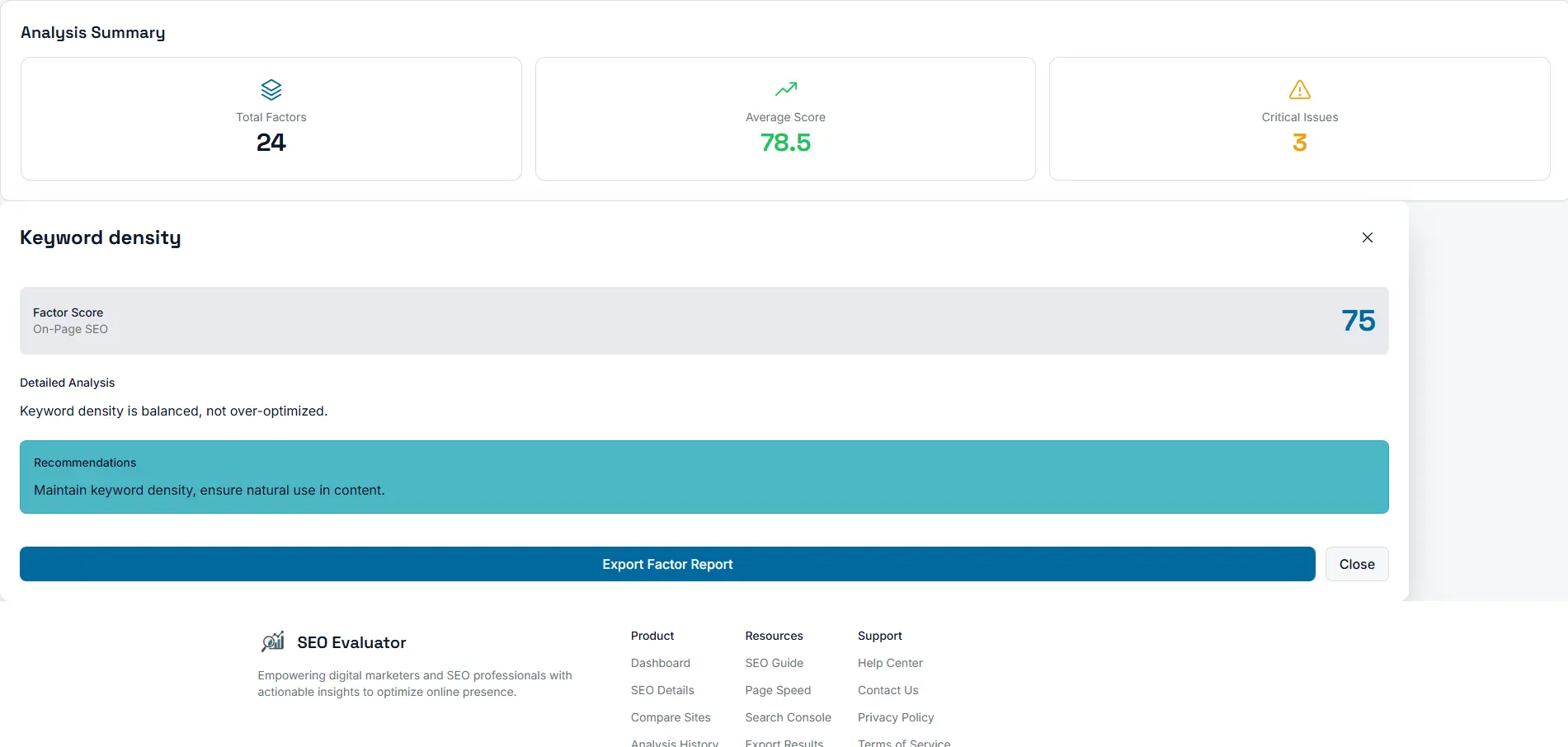
The v0 output, while functional, definitely felt like it could use a bit of human intervention. The design, while responsive and using modern components, wasn't quite as polished, and the suggested directory structure in the generated code felt a little haphazard. It gave me the building blocks, but not necessarily the most optimized organization right away. It needed a developer's touch to clean it up and integrate it seamlessly.
The Verdict: Context is King
After running both tools through their paces, my conclusion became crystal clear, and it’s all about workflow and application complexity.
For me, Bubble.io is the preferred choice when I need to work on complex applications with multiple layers, deep data structures, and intricate user workflows. Its strength lies in providing a persistent, visual, and highly customizable environment. It's a great match for taking a prompt and applying that essential "human touch" tweaking the UI, building the backend logic visually, and connecting data across different states. It truly shines for building an entire business platform.
However, when it comes to quick shipping, generating reusable components, or bootstrapping a project with production-ready code, v0 is my new go-to. If I need a developer to rapidly prototype a specific feature or generate the logic for a custom API endpoint in minutes, v0’s ability to deliver high-quality React and Tailwind code, complete with basic logic, is an absolute game-changer. It's a powerful developer assistant that accelerates the front-end and initial backend build process dramatically.
They are different tools for different phases, but both are incredibly powerful additions to the modern developer's toolkit.
Inspire Others – Share Now
Agentic AI Saksham
India’s Only 1st Ever Offline Hands-on program that adds 4 Global Certificates while making you a real engineer who has built their own AI Agents
EV
Saksham
India’s Only 1st Ever Offline Hands-on program that adds 4 Global Certificates while making you a real engineer who has built their own vehicle
Agentic AI LeadCamp
From AI User to AI Agent Builder — Capabl empowers non-coding professionals to ride the AI wave in just 4 days.
Agentic AI MasterCamp
A complete deployment ready program for Developers, Freelancers & Product Managers to be Agentic AI professionals